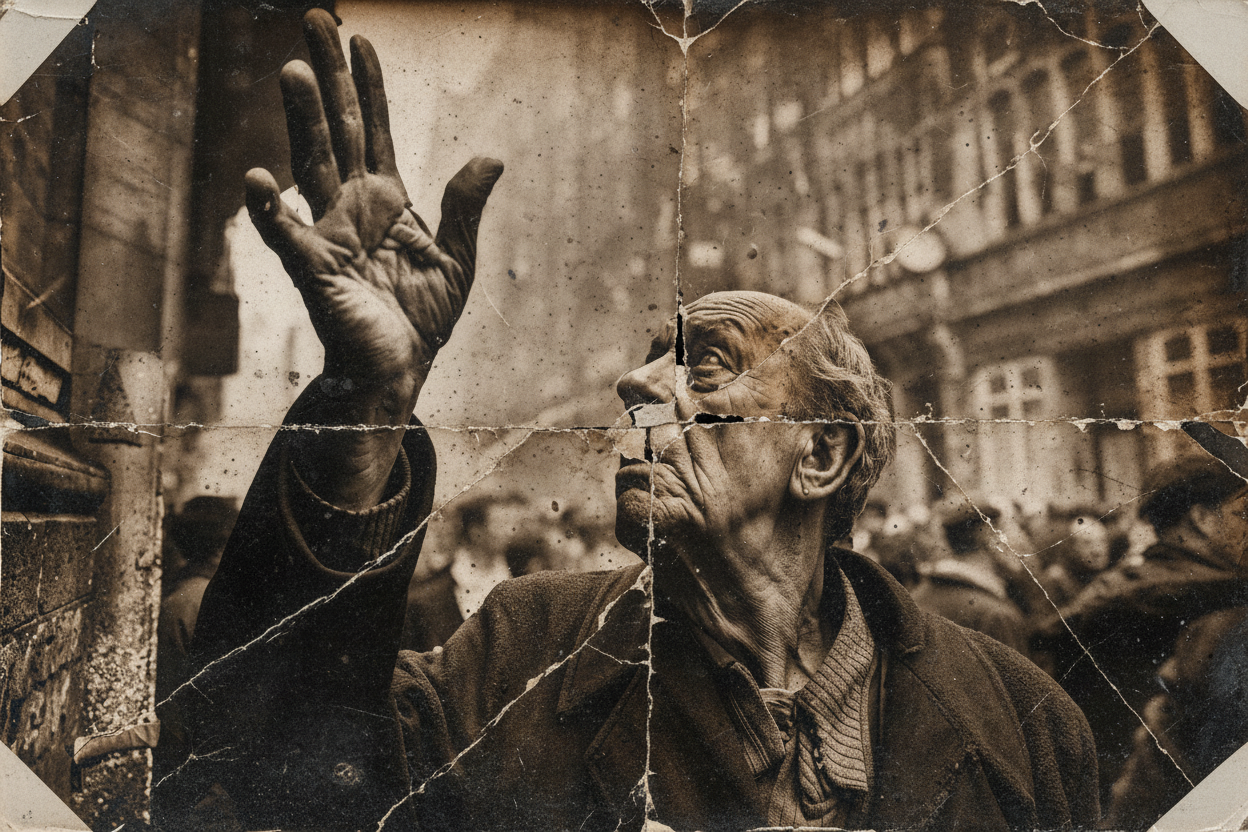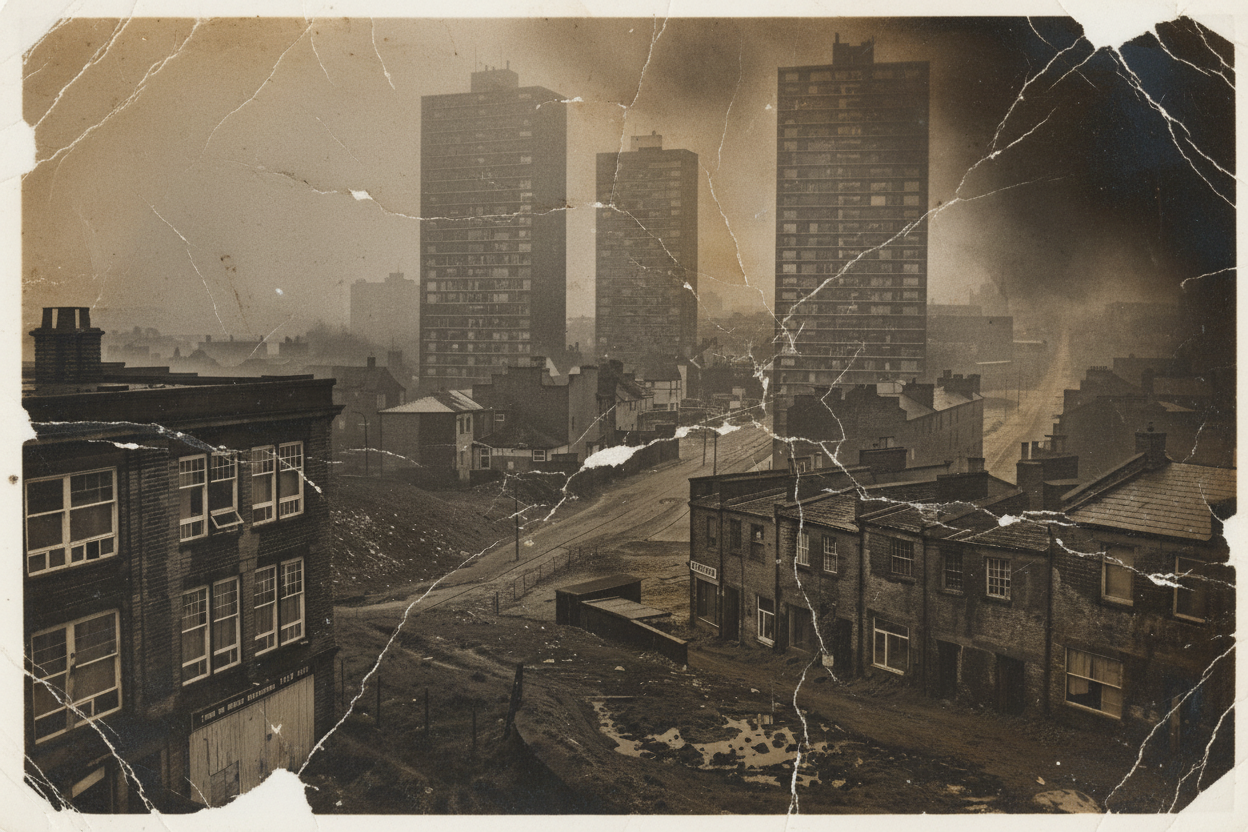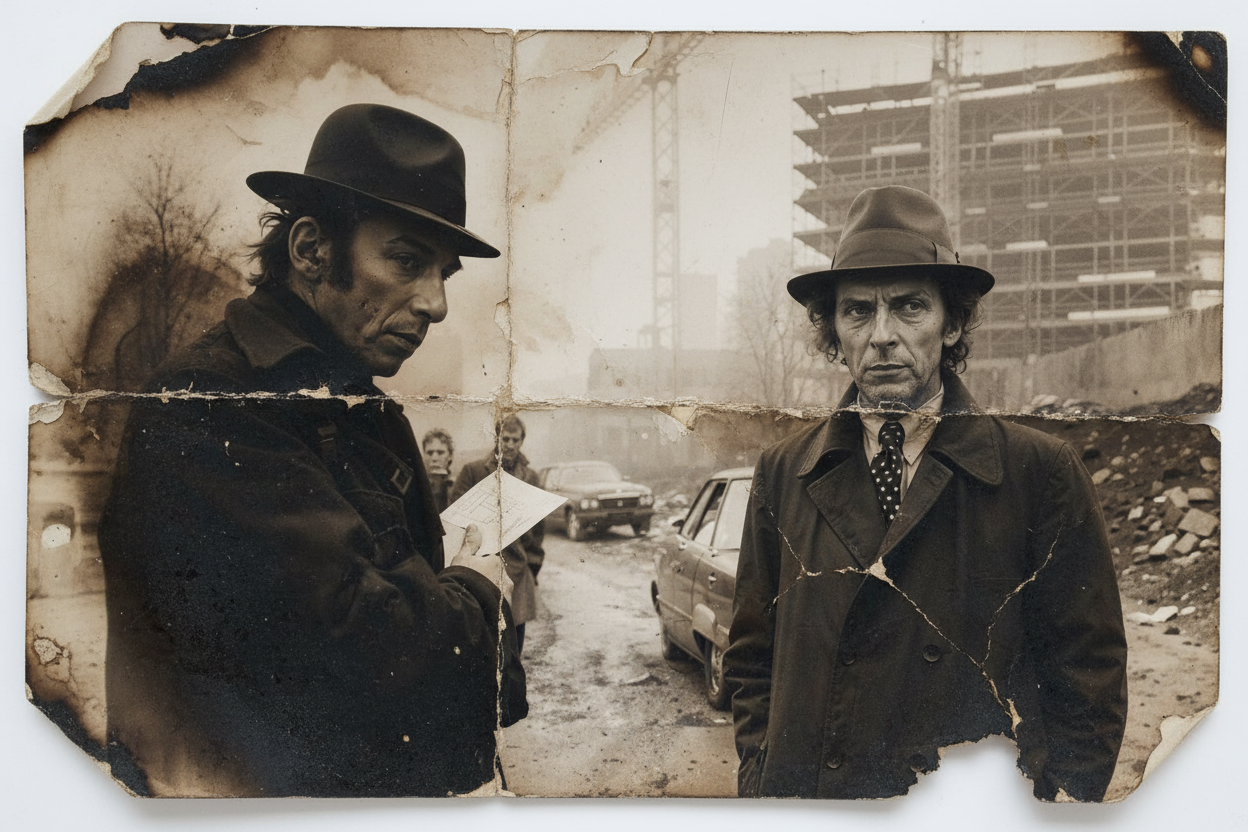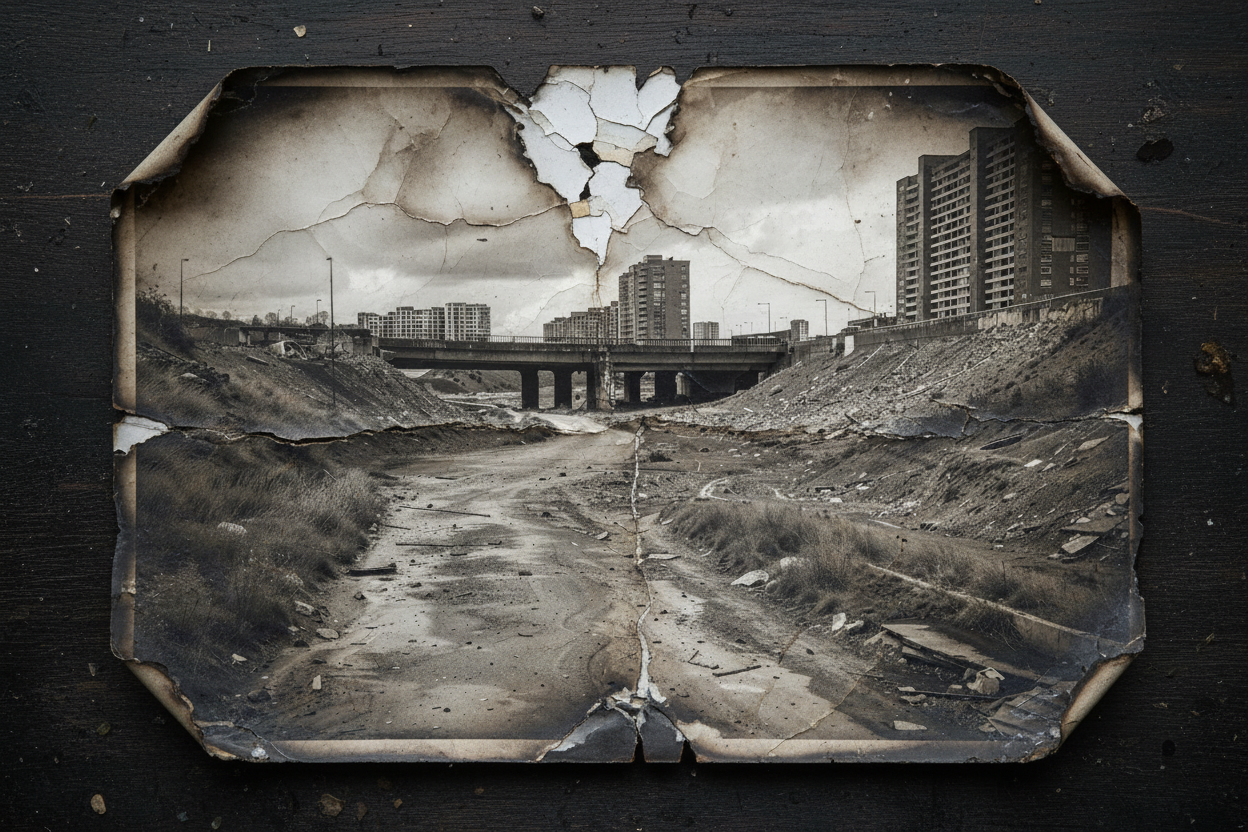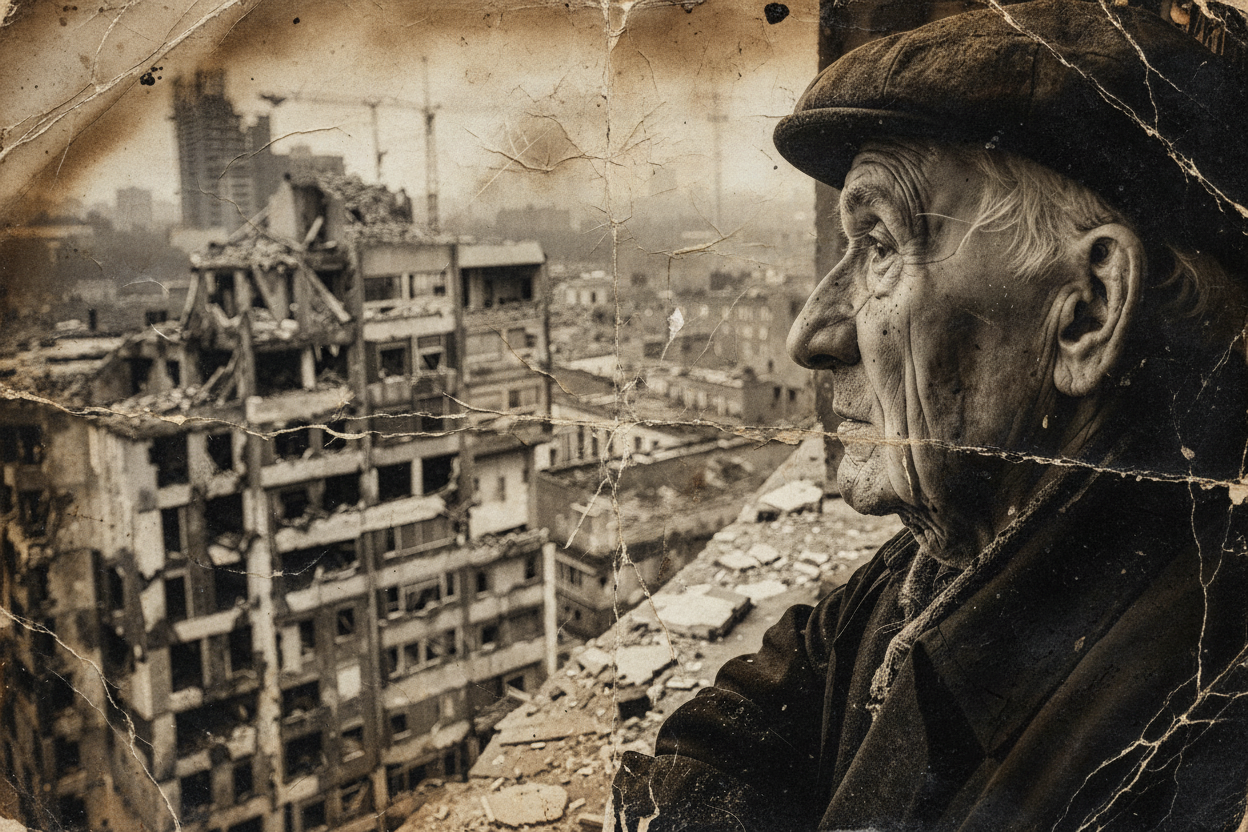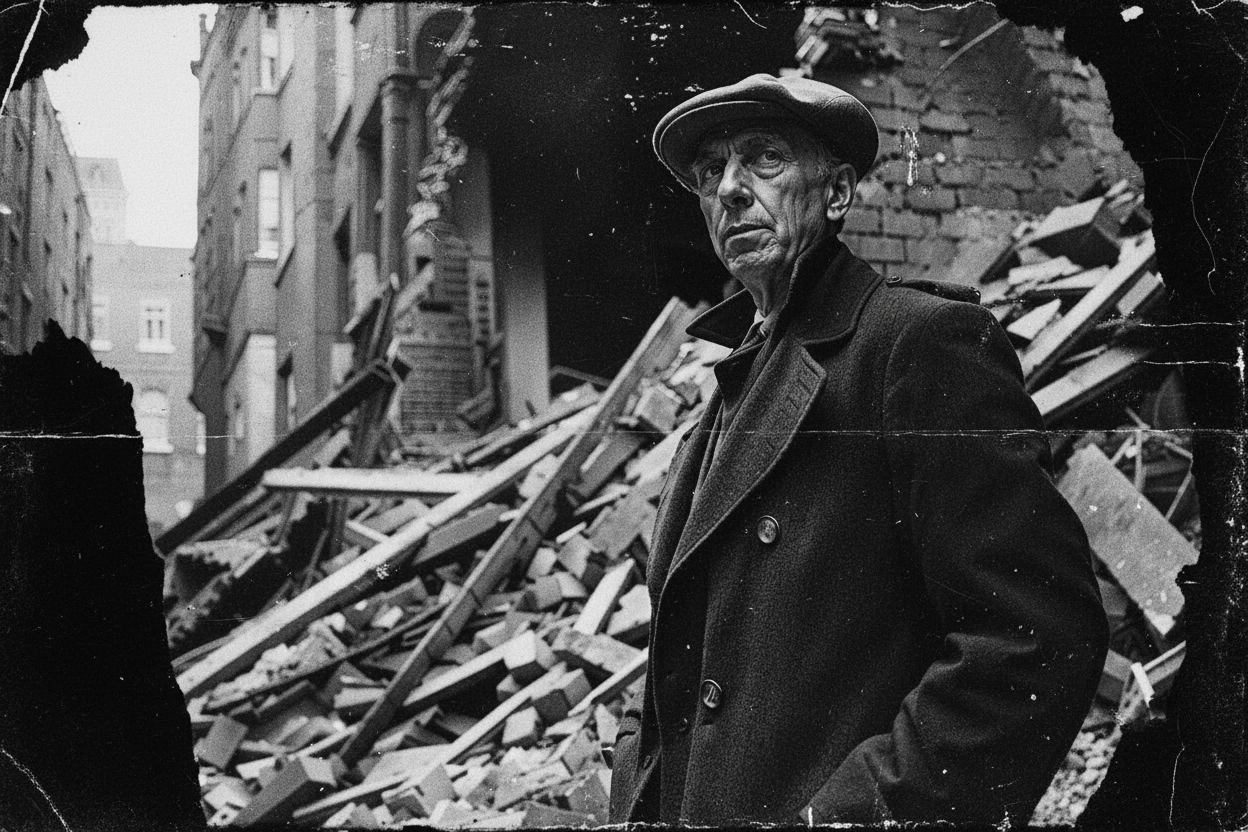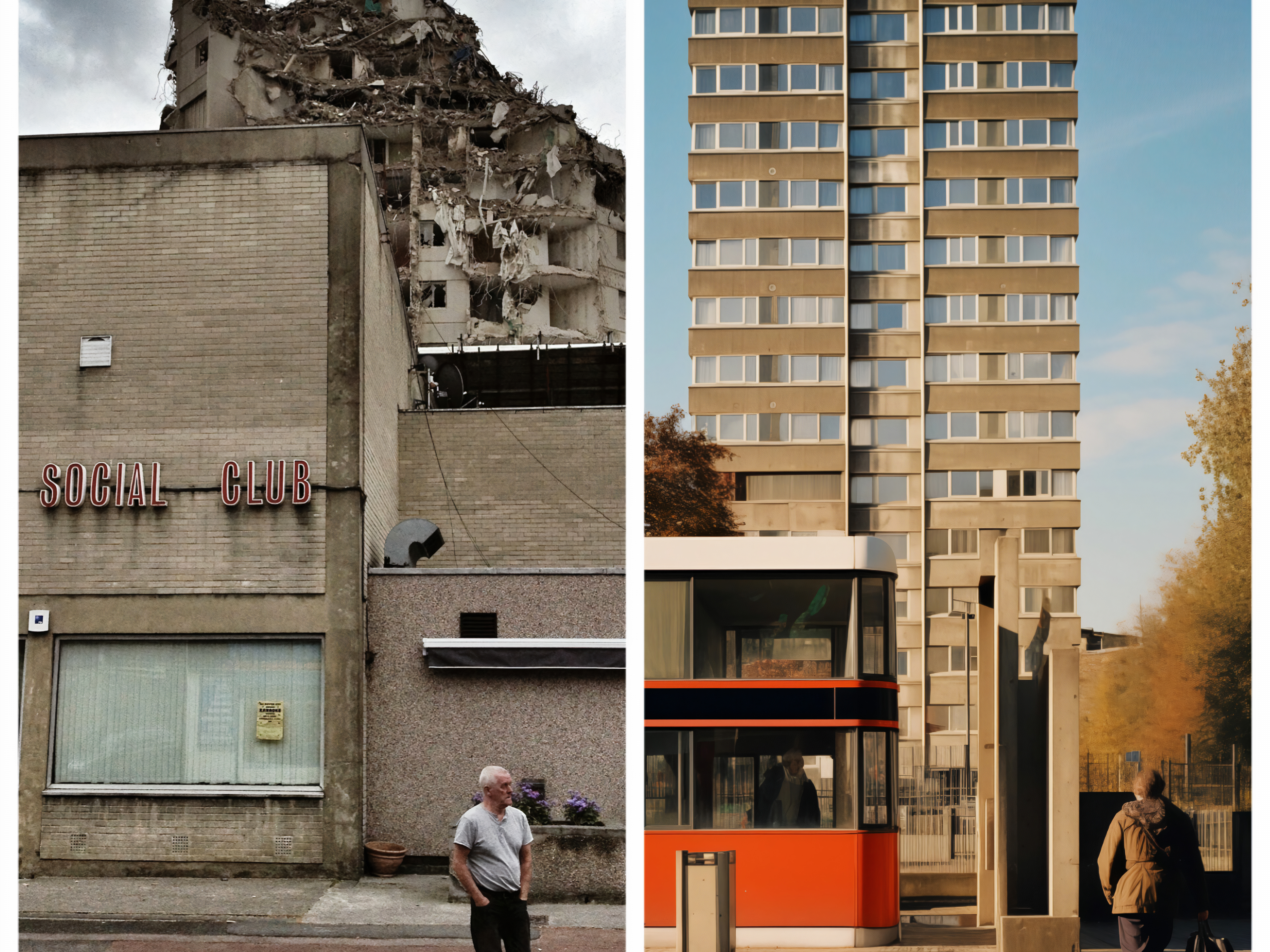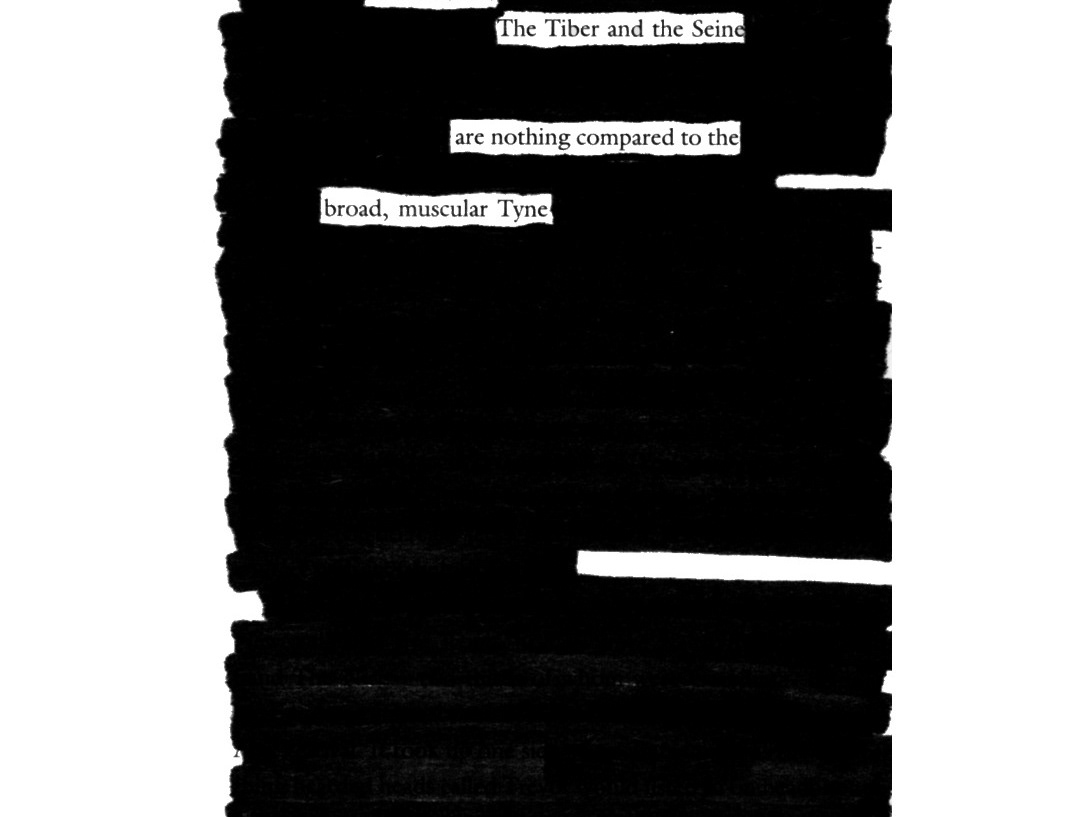
Turning of the Dial is a work of speculative fiction set against the concrete ambitions and slow collapse of post-war Britain. Told through a sequence of interconnected chapters, it follows the human cost of an era when planners, architects, and developers reshaped entire communities in the name of progress, and the generations left to live, and grieve, among the consequences.
At the centre of the project is a cast of recurring figures, among them the shadow of Thomas Danielson, a developer whose Brutalist designs reshapes a region, alongside miners, architects, journalists, and ordinary residents caught in the turn of the dial between one world and another. The chapter titles alone form a kind of poem: Selling the Vision, Blinded by Progress, The Death of the Village Square, A Miner's Lament. Each one marks a stage in a familiar story told, here, as if for the first time.
The project draws on the visual grammar of Brutalist architecture, its scale, its ambition, its abandonment, as both setting and metaphor. These were buildings designed to signal a new society; many became monuments to the limits of that vision. Turning of the Dial sits in that gap, asking what was promised, what was built, and what was lost when the dial turned again and the concrete was demolished.
The work extends my sustained inquiry into Northeast English identity, working-class memory, and the fictions that communities are asked to inhabit.